Integrated Security Systems: Why Better Cooperation Between Systems Matters
An employee leaves the company. The HR department completes the paperwork and IT disables the user account, but does anyone remember to revoke their access rights to every door, parking area and other system? When a company uses several separate security solutions, one employee’s departure can mean a whole series of manual changes. Just one overlooked step can leave an access permission active longer than it should be.
This is just one example of how managing a company’s security can become unexpectedly complicated. A building may have an excellent intrusion alarm system, reliable access control, video surveillance, a visitor register and a parking management solution. But when each operates independently, managing them can take a considerable amount of time. As a company grows, new employees, premises and sites are added, along with more and more tasks that depend on people remembering to take the right action.
This raises a question that is discussed far too rarely when it comes to security solutions: does a company need more security systems, or does it need systems that work better together?
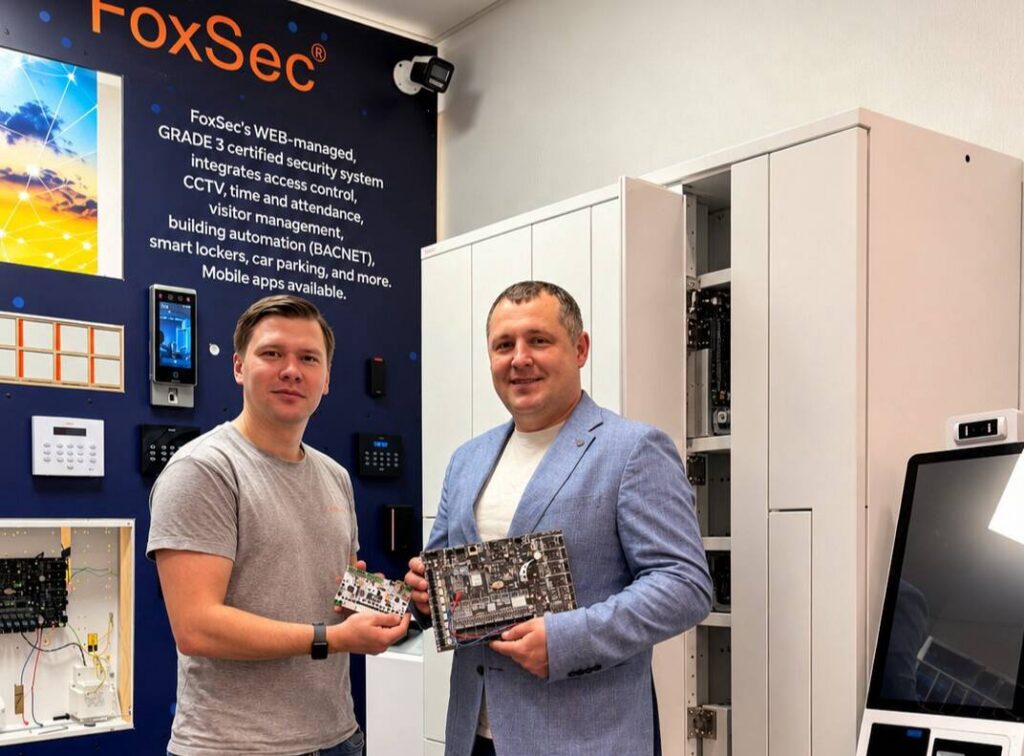
This is a question that FoxSec Sales Manager Siim Kajo deals with every day. When planning security solutions, it is not enough to know how many doors need to be controlled or which devices should be installed at a site. The first step is to understand how people move around the building, which daily processes the company needs to manage and what information the people responsible actually need.
Behind the FoxSec brand is Hardmeier OÜ, a company based in Tallinn, Estonia, which began developing and manufacturing integrated intrusion alarm and access control systems back in 1994. The FoxSec brand was established in 2006 and, according to the company, more than 20,000 FoxSec systems have been installed worldwide. Both hardware and software are developed and manufactured in Estonia.
Extensive experience and technological capabilities provide a strong foundation. For customers, however, what matters most is how much easier and more secure the system makes their everyday operations.
When Every Door Speaks a Different Language
Consider a typical commercial building. Employees arrive in the morning, followed a little later by visitors and business partners. A maintenance technician needs access to a technical room, a courier needs to enter the goods receiving area, and some employees are also authorised to use the company car park. At the same time, the company needs to monitor who can access which areas, at what times access is permitted and whether everyone’s permissions still match their actual responsibilities.
When access control, intrusion alarms, parking and visitor registration operate in separate systems, even a small change can require several actions. An employee moves to another department, but their previous access permissions remain active. The company opens a new floor or site, and the administrator has to learn yet another management program. None of these situations may seem like a major problem on its own, but together they can significantly increase the administrative workload.
FoxSec WEB was developed to bring these tasks together. The web-based management platform combines access control and intrusion alarm management and allows visitor management, time and attendance tracking, parking, occupancy information, smart lockers and key cabinets to be integrated into the same environment. The system can also be integrated with video surveillance, licence plate recognition, building automation and other solutions.
In practice, this means that the person responsible does not have to constantly switch between different programs or make the same changes in several places. When an employee’s permissions change, they can be managed in a unified environment, reducing the risk of outdated access rights accidentally remaining active.
The fewer repetitive and manual tasks there are, the easier the system is to manage and the lower the risk of human error. The value of a security system is therefore determined not only by the number of devices or their technical specifications, but also by how well the entire solution fits into the company’s daily operations.
One Card, Multiple Possibilities
An employee arrives at the office in the morning, drives into the car park, opens the building door with an access card and registers their working time. Later, they use the same card in the company canteen or to open their assigned smart locker. All these activities can be linked to a single user identity.
An access card is usually thought of as a key to a door, but behind the card is a person’s identity and the permissions assigned to them. In the FoxSec system, these permissions determine which areas a person can access and when. The same identity can be used for time and attendance registration, parking, smart locker access and the company canteen.
This means that introducing a new function does not necessarily require creating a separate user account, issuing a new card or implementing another management platform. The company can use its existing infrastructure for several different purposes.
The value of this becomes particularly clear in larger organisations, where employees move between departments, change positions or temporarily take on different responsibilities. For example, an employee may need access to new areas after taking on a different role, while permissions that are no longer necessary must be removed.
From a security perspective, both changes are equally important. It is not only about ensuring that people can enter the doors they need to use, but also about preventing access to areas that are no longer relevant to their responsibilities.
When a Visitor Leaves, Their Access Expires
Alongside employees, many other people enter company premises every day. These may include business partners, customers, maintenance technicians or subcontractors. Some need access to a meeting room for just an hour, while others may need to enter technical areas over several days.
How can a company ensure that everyone can access only the areas they need, and only for as long as their visit or work requires?
FoxSec’s visitor management solution allows guests to be pre-registered and, for example, to use a temporary QR code for entry. Access is linked to a specific period and the necessary permissions. This allows a maintenance technician or visitor to access designated areas without necessarily having to receive a physical access card.
Time-limited access helps prevent permissions granted for a one-time visit from remaining active after the work or meeting has ended. It also reduces the need to issue, collect and manage physical visitor cards.
The principle is simple: the right person should be able to access the right place at the right time – and no longer than necessary.
In an Emergency, Every Person Matters
The everyday purpose of a security system seems quite straightforward: allow authorised people to enter the right areas, prevent unauthorised access and trigger an alarm when necessary. However, an access control system installed in a building also collects information every day that may prove useful in entirely different situations.
Imagine a fire alarm being triggered in a large manufacturing facility and everyone having to evacuate. Employees gather at the designated assembly point, but the person responsible faces an important question: has everyone made it outside, or could someone still be inside the building?
In such a situation, the information collected by the access control system can be extremely valuable.
FoxSec InPlace uses access events to provide an overview of the registered presence of people in a building or on a site. The system relies on designated entry and exit points and the movements recorded through them.
During a normal working day, the solution helps provide a clearer overview of who is present on site. In an emergency, the responsible person can use the same information to check who may still be inside the building. It is important to remember, however, that the information is based on recorded access events and does not replace physically verifying people’s safety.
The important point is that the company does not need to create an entirely new source of data to obtain this overview. Instead, it can use information already collected by the access control system.
This is also a good example of how a company can gain additional value from its investment in security. Data needed for access control can also support everyday operations and help people make faster decisions in an emergency.
Does a Security System Need Its Own Server?
Not so long ago, many people associated a security system primarily with control panels, card readers and a server located in a technical room. Today, however, much of the system’s management can be carried out through a web-based platform.
FoxSec WEB operates through a web browser and allows users to access the system according to their assigned permissions. For example, an administrator can manage the users and sites assigned to them, while an employee with a different role sees only the information and functions necessary for their work.
Companies can also choose where the system’s server environment is hosted.
FoxSec Cloud allows FoxSec WEB to be used as a cloud-based service. In this case, the company does not need to set up or manage its own FoxSec WEB server environment. This reduces the need for internally managed IT infrastructure and the administrative tasks associated with it.
However, a cloud solution may not be suitable for every organisation. Some companies or institutions have IT and security requirements that mean the system must operate within their own server environment. FoxSec WEB also supports this option.
This allows each company to choose a deployment model that suits its needs and requirements. It can be particularly important for organisations where the security system must comply with strict internal IT policies or where the company wants to manage its own server environment.
A Solution That Can Be Maintained, Modified and Expanded
A security system can be planned in great detail during the design phase. It is possible to specify which doors should open, where card readers should be installed, which systems should communicate with each other and how user permissions should be managed. The real test, however, begins when the solution has to be made operational in an actual building.
Existing doors, locks, cables, card readers and other systems may not always fit together with a new solution as easily as initially expected. It is also necessary to consider how people actually move around the building and which tasks they perform every day.
This is precisely the work carried out by FoxSec Installation and Maintenance Manager Roger Suuressaar. His responsibility is to ensure that the planned solution works in practice and that access control, intrusion alarms and other parts of the system function together.
Installation requires consideration of both the existing infrastructure and the company’s daily operations. The solution must also be designed so that it can be maintained, modified and expanded in the future. After all, a security system is not a one-time purchase whose operating requirements will remain unchanged for the next ten years.
One of FoxSec’s strengths is its ability to handle system development, manufacturing, installation and maintenance. For customers, this means that when technical questions arise, there are people available who understand both the product itself and how it is used in real-world installations.
For FoxSec, responsibility does not end when the system has been installed and handed over. The company is responsible for the quality of its products, which are covered by warranties in accordance with applicable legal requirements and warranty terms.
Because a security system is a long-term investment, technical support after installation is just as important. FoxSec aims to find solutions to problems that arise and ensure the reliable operation of its systems for years to come. When a company’s needs change or a technical issue arises at a site, it should be possible to turn to people who know how to adapt the solution and provide assistance when needed.
Practical experience also plays another important role. When Roger and other technicians repeatedly encounter a particular need or technical challenge at customer sites, that knowledge can be passed back to the product development team. In this way, the installation and maintenance team’s daily work also helps shape future system features and improvements to existing solutions.
A New Office, but the Same Rules
In a small company with only a few doors and employees, managing a security system may not take much time. Complexity increases as the organisation grows, bringing new employees and departments, visitors, subcontractors and parking spaces.
A company may move into larger premises, open a new manufacturing facility or expand into another country. Every new location means additional doors, users and permissions that need to be managed.
For example, a company’s head office might be in Tallinn, its manufacturing facility in Tartu and its next sites abroad. If each location uses a separate management platform, maintaining an overall view becomes increasingly difficult.
With FoxSec, the necessary systems can be brought together in one management environment. Administrators can be assigned permissions according to which sites or users they are responsible for. This means that the person in charge does not necessarily need to learn new software for every additional location or constantly switch between different programs.
For a company operating across multiple sites or countries, this provides a consistent approach to management and a clearer overview, regardless of where the buildings are physically located. Adding a new site does not necessarily mean creating a separate software environment.
The same principle also applies within a single large commercial building occupied by several companies or departments. For example, each tenant can be given permission to manage its own employees and premises, while the building’s main administrator retains a broader overview of the entire property.
This allows the system to grow alongside the organisation. As new employees, buildings or locations are added, the existing management approach can be maintained while permissions and functions are adjusted to meet changing needs.
Developed in Estonia, Used Around the World
Estonia is best known internationally for its software and digital services. Less attention is given to companies that, alongside software, also develop and manufacture physical technology that must operate reliably in buildings around the clock, year after year.
FoxSec is one of those companies. Both hardware and software development and manufacturing are carried out by a team based in Estonia. Hardmeier OÜ began working with integrated intrusion alarm and access control systems in 1994. The FoxSec brand was established in 2006 and, according to the company, more than 20,000 systems have been installed worldwide under the FoxSec brand.
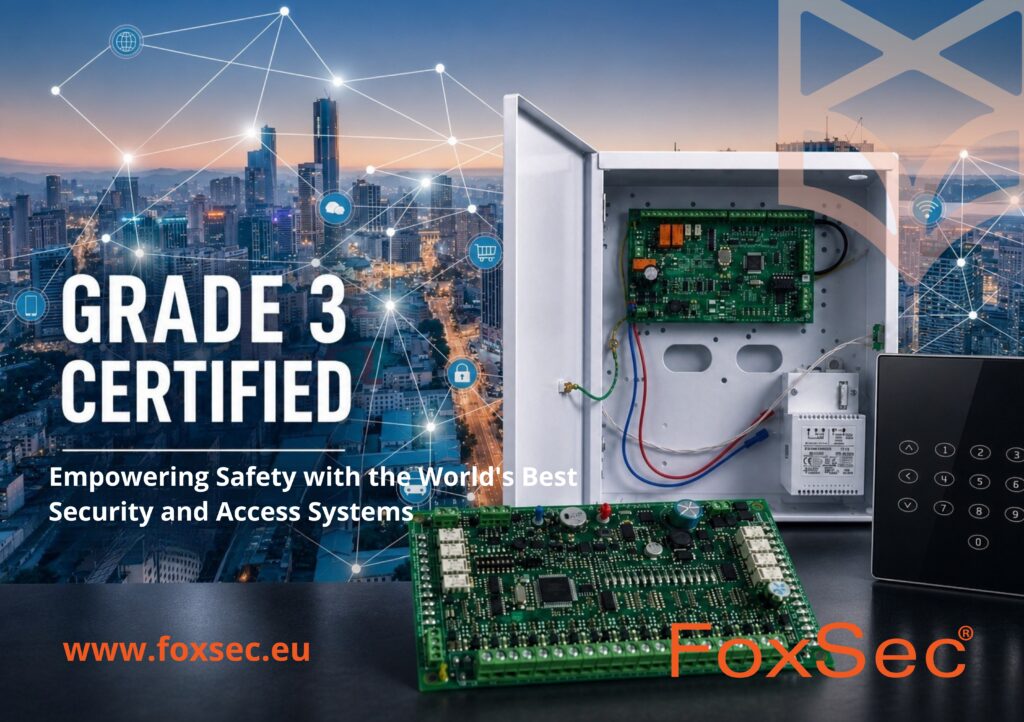
FoxSec offers solutions for smaller properties, large commercial buildings and facilities with higher security requirements. Its product range also includes EN 50131 Grade 3 certified devices that meet the requirements of this security grade.
Technical specifications, certifications and extensive development experience are important when choosing a security solution. For a company, however, the true value of a system becomes clear in everyday use: how easily employee and visitor permissions can be managed, how well intrusion alarms and access control work together, whether parking and other functions form part of a unified solution, and how smoothly the system can be expanded as the company grows.
Equally important is knowing that behind the solution are people who understand the technology from development through to installation and maintenance, and who can continue to help as the company’s needs change over the years.
Are you planning a new security system or looking for ways to make better use of your existing solutions?
Get in touch with us! We will discuss your needs and explore how FoxSec solutions can simplify your company’s daily operations and improve security.
Sales
Siim Kajo Phone: +372 523 5912 Email:
Installation and Maintenance
Roger Suuressaar Phone: +372 525 9513 Email:
integrated security systems